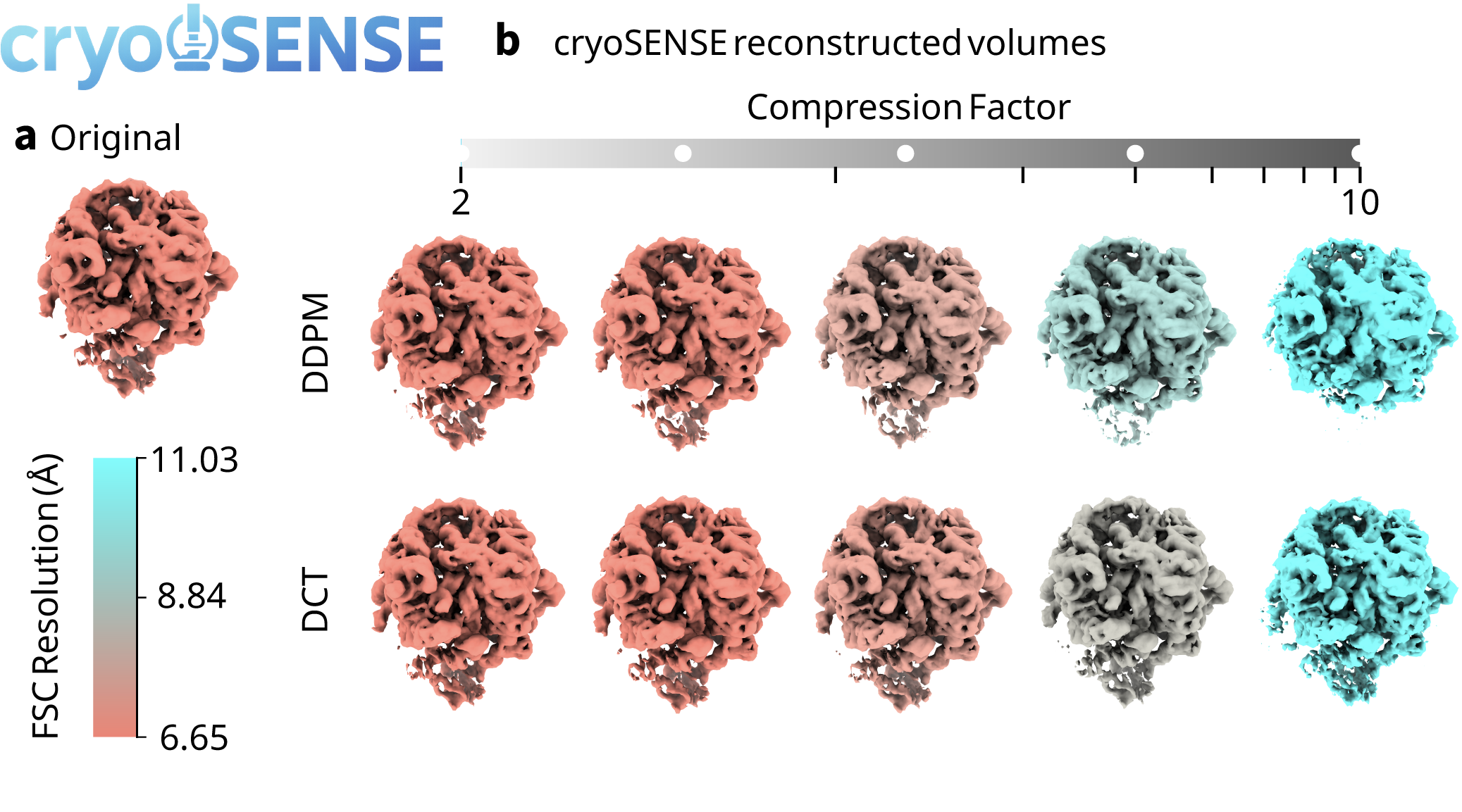
cryoSENSE: Compressive Sensing Enables High-throughput Microscopy with Sparse and Generative Priors on the Protein Cryo-EM Image Manifold
Presents cryoSENSE, a compressive sensing method for cryo-EM that delivers 2.5× throughput improvement through high-fidelity protein image reconstruction using generative diffusion and sparse priors.
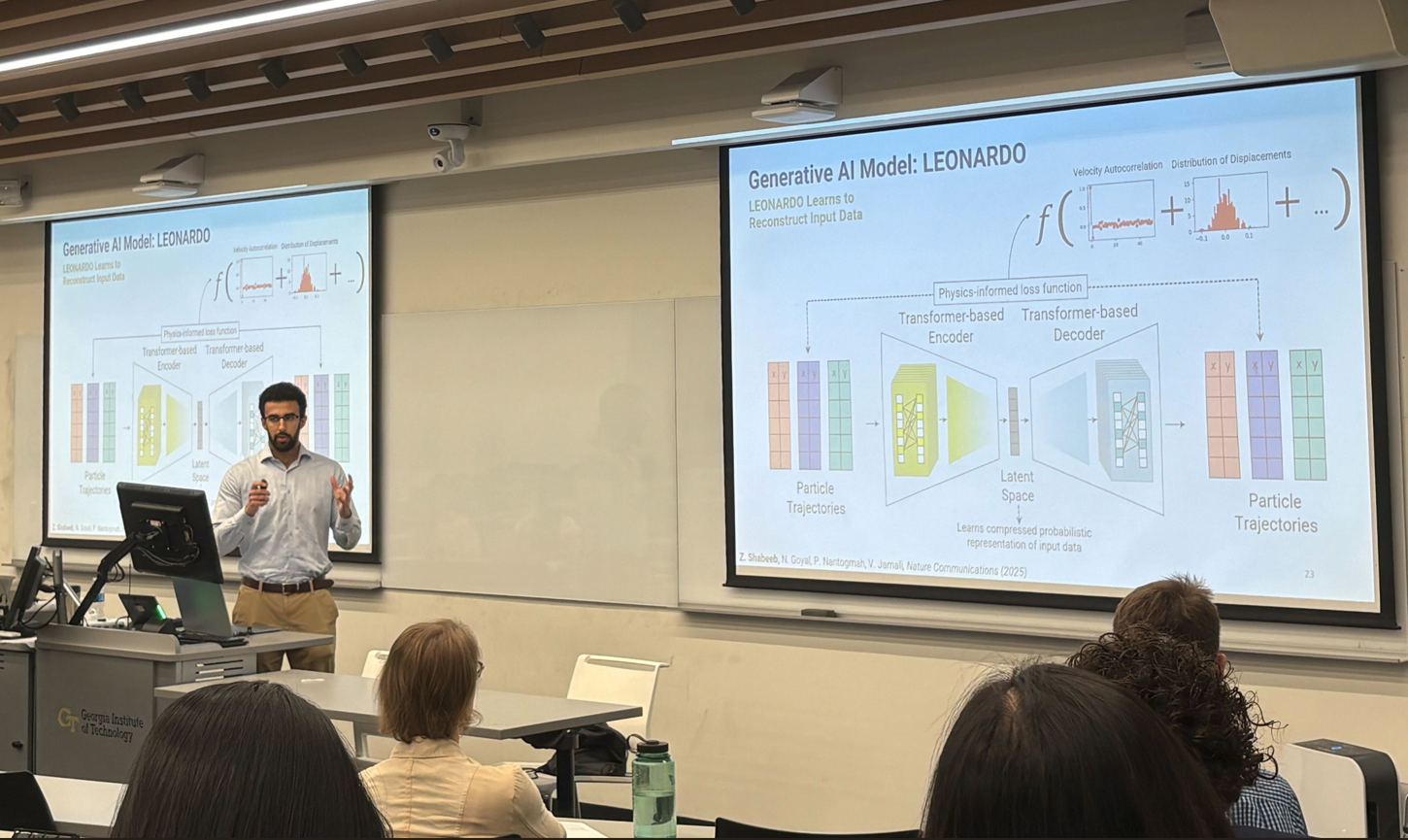
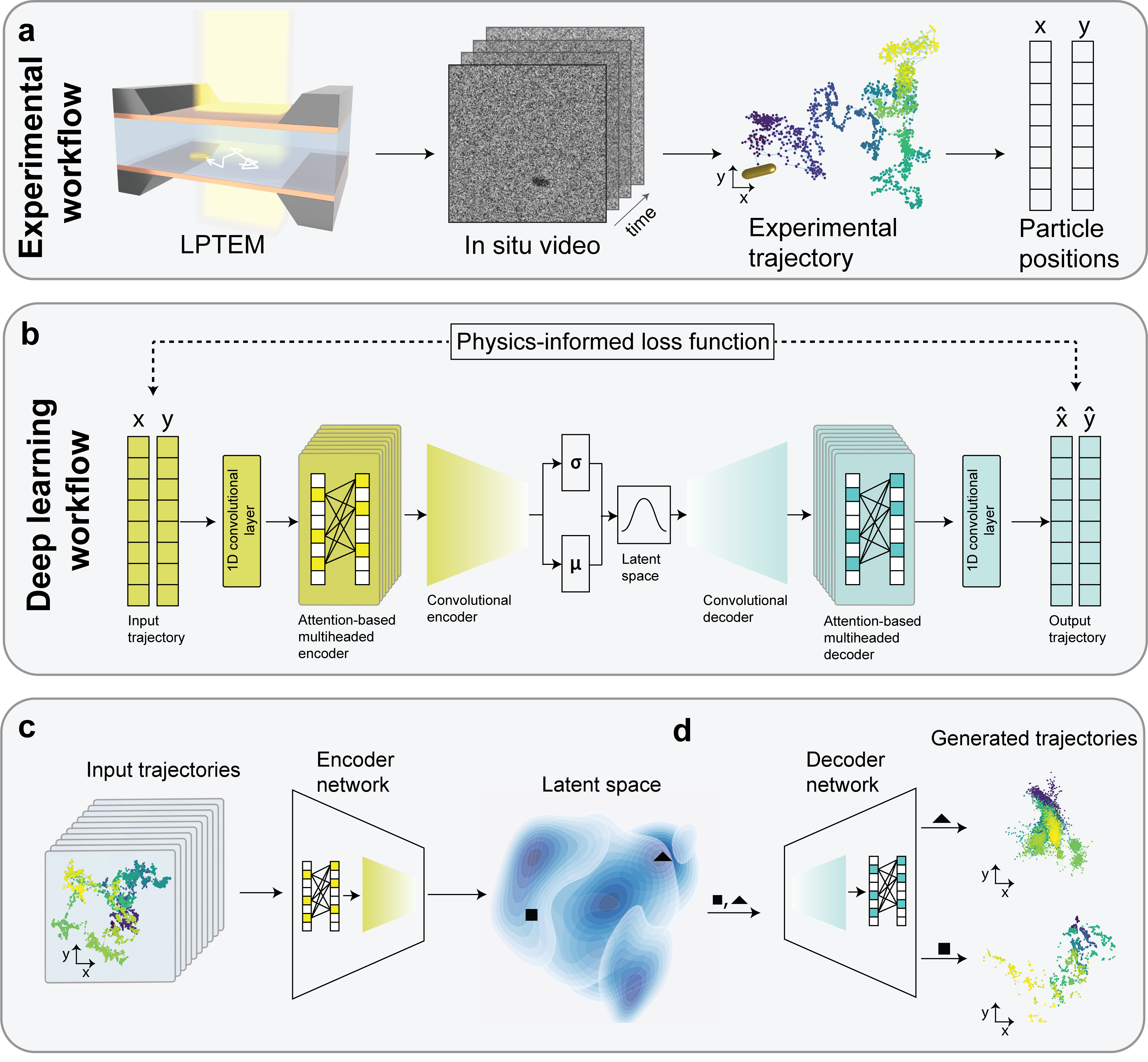
Learning the diffusion of nanoparticles in liquid-phase TEM via physics-informed generative AI
Introduces LEONARDO, a physics-informed Transformer-VAE that learns stochastic nanoparticle motion from LPTEM in-situ videos and generates physically consistent trajectories with 95%+ accuracy.
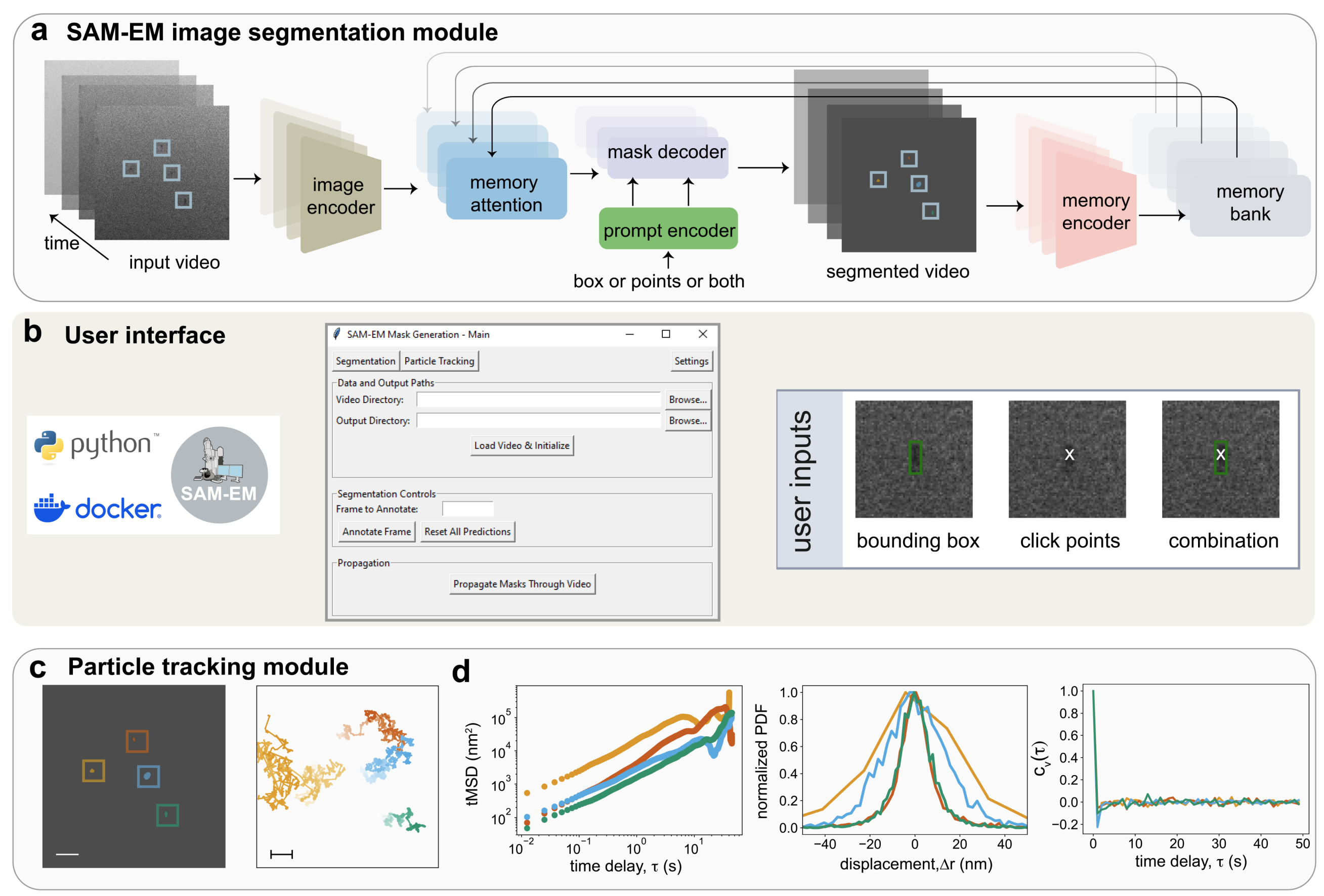
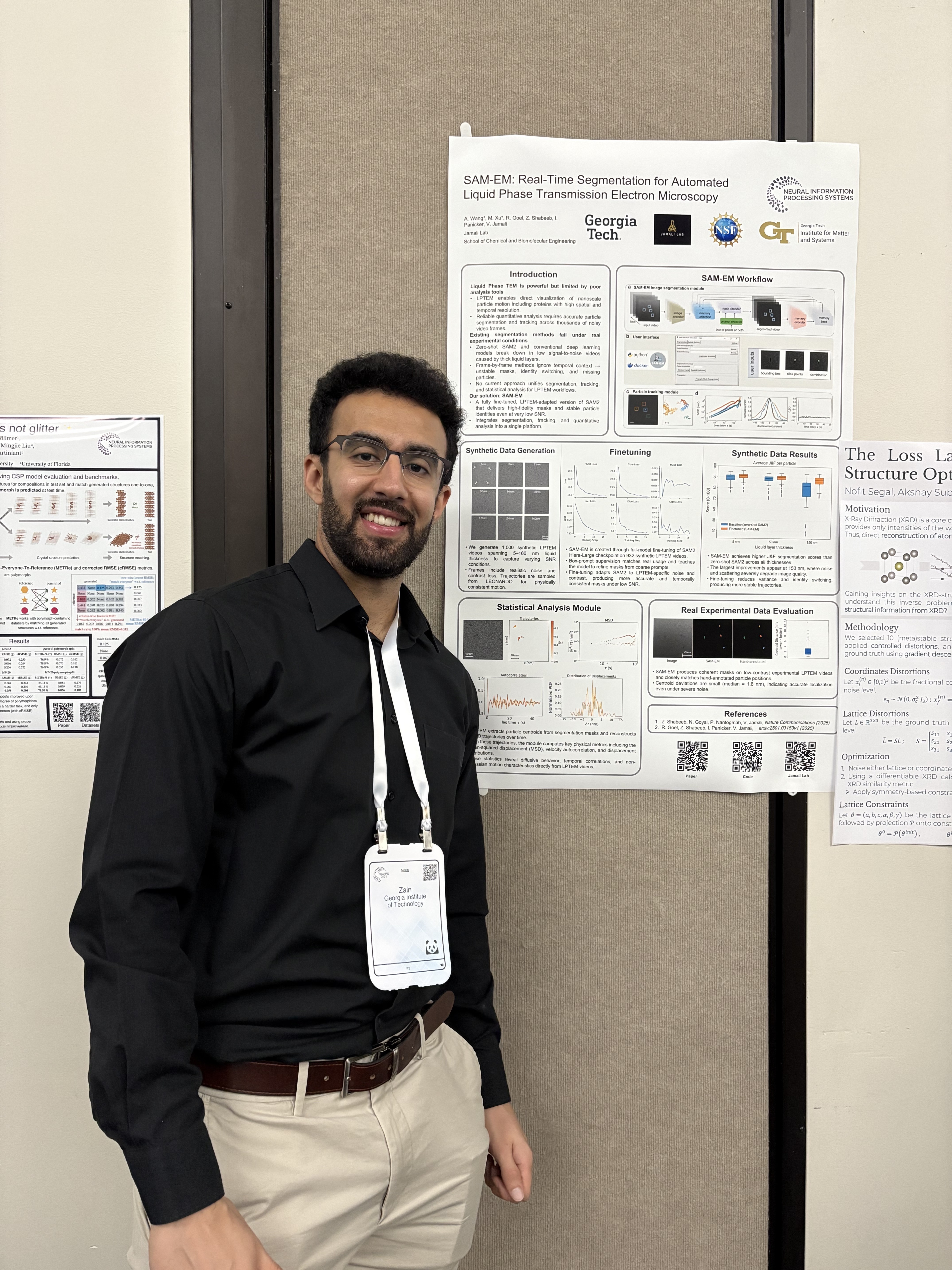
SAM-EM: segment anything for liquid-phase electron microscopy video segmentation
Introduces SAM-EM, a SAM-2–based video segmentation framework fine-tuned for LPTEM to achieve state-of-the-art segmentation accuracy on noisy videos with particle overlapping and aggregation instances.
LEONARDO: A Physics-Informed Generative Model for Stochastic Nanoparticle Dynamics in Liquid-Phase TEM
Workshop paper on LEONARDO (see above), detailing the physics-informed loss function and introducing the Fréchet Motion Distance (FMD), a metric for evaluating generative realism of nanoparticle trajectories.
Learning the Physics of Liquid Phase TEM Nanoparticle Trajectories Using Physics-Informed Generative AI
Proceedings abstract on physics-informed learning of nanoparticle trajectories from experimental LPTEM data.
Determining Diffusion Characteristics of Nanoparticles in Liquid Phase TEM Using Deep Learning
Proceedings abstract on inferring diffusion regimes from LPTEM with deep-learning analysis.
Solution-Tunable Interfacial Interaction Landscape Governs Anomalous Nanoparticle Diffusion in Liquid-Phase Electron Microscopy
Paper revealing how ionic composition controls nanoparticle–surface interactions in LPTEM, highlighting tunable transitions between FBM and ATTM diffusion regimes and introducing a passive nanorheology framework for viscoelastic modeling of interfacial environments.